
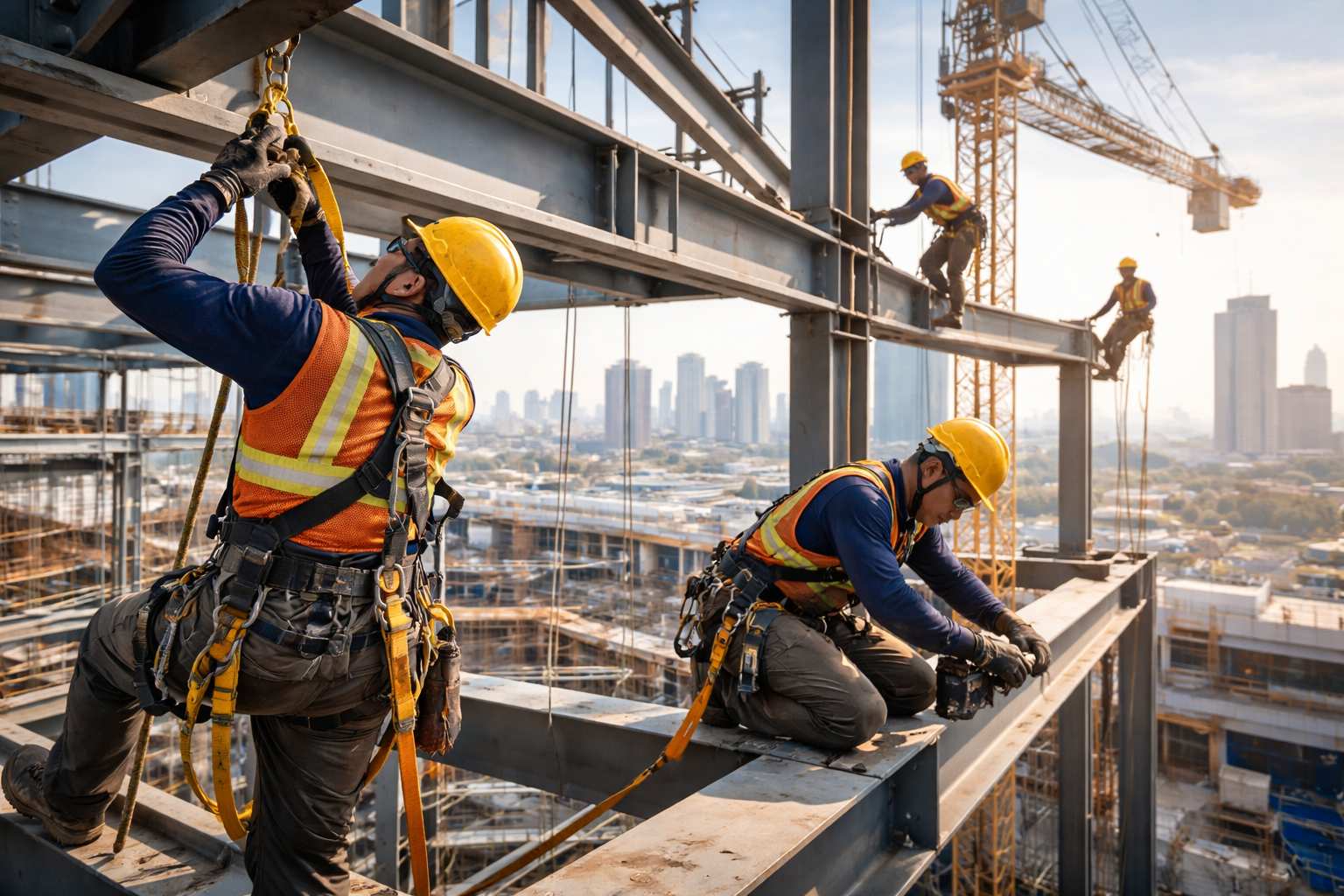
Working at height
Working at Heights: Risks, Responsibilities, and Best Practices
Working at heights is an unavoidable reality in many construction, industrial, and infrastructure-related industries. Tasks performed above ground level expose workers to one of the most severe workplace hazards: falls. Falls from height remain a leading cause of serious injury and fatalities across construction and transport sectors worldwide.
Because of the inherent risks, robust safety systems must be established before any work at height begins. This includes comprehensive risk assessments, clear method statements, competent supervision, and the use of appropriate fall protection systems. When properly implemented, these measures significantly reduce the likelihood of accidents and protect both workers and employers.
Understanding the Risks of Working at Heights
Falls from height can result in severe injuries such as fractures, spinal trauma, head injuries, or death. Even a fall from a relatively low elevation can have life-altering consequences. These risks increase significantly when environmental factors such as weather, poor lighting, unstable surfaces, or improper equipment are present.
Common contributing factors to fall incidents include:
- Inadequate or missing fall protection systems
- Improper use of ladders or scaffolding
- Poor housekeeping and cluttered work areas
- Insufficient training or supervision
- Rushing tasks or bypassing safety procedures
Examples of Work at Heights
Work at height is defined not only by elevation, but by the potential for a worker to fall and sustain injury. Typical examples include:
- Towers and telecommunication masts
- Utility poles and transmission structures
- Grain elevators and silos
- Ladders and elevated platforms
- Scaffolding systems
- Vehicles, trailers, and loading docks
High-Risk Sectors
Certain industries consistently report higher rates of fall-related incidents due to the nature of their operations. Ongoing investigations by labour and safety authorities continue to highlight these sectors as requiring enhanced controls and monitoring.
| Sector | Primary Fall Hazards |
|---|---|
| Longshoring | Falls from ladders, vehicles, and ship access equipment |
| Road Transport | Falls from vehicle beds, loading docks, and cargo areas |
| Telecommunications | Falls from ladders, towers, poles, vehicles, and stair systems |
| Air Transport | Falls from aircraft access stairs, scaffolding, and maintenance platforms |
Risk Assessment and Method Statements
Effective prevention starts with a formal risk assessment conducted by a competent safety professional or engineer. This process identifies potential fall hazards, evaluates exposure, and defines appropriate control measures. Each task performed at height should be supported by a clear method statement that outlines:
- The sequence of work activities
- Identified hazards and associated risks
- Required fall protection equipment
- Emergency and rescue procedures
- Roles and responsibilities of workers and supervisors
Essential Safety Measures
To reduce the risk of falls, employers and site managers must ensure that essential safety precautions are consistently followed:
- Use of certified fall protection systems such as harnesses, lanyards, and lifelines
- Installation of guardrails, barriers, or collective protection where feasible
- Regular inspection and maintenance of access equipment
- Comprehensive training for all workers exposed to fall hazards
- Continuous supervision and enforcement of safety procedures
Ongoing Monitoring and Investigation
Labour and safety programs continue to review fatalities and hazardous fall incidents to identify trends and improve prevention strategies. Lessons learned from investigations are critical in refining safety standards, training programs, and engineering controls across industries.
Organizations that proactively apply these findings demonstrate stronger safety cultures and significantly lower incident rates.
Conclusion
Working at heights will always involve risk, but those risks can be effectively managed through planning, engineering controls, training, and strict adherence to safety protocols. By prioritizing fall protection, conducting thorough risk assessments, and maintaining competent oversight, employers can protect their workforce and ensure compliance with safety expectations.
Ultimately, a strong commitment to working-at-heights safety not only saves lives—it protects businesses, reputations, and the long-term wellbeing of workers across high-risk sectors.
© 2026 — Safety Awareness & Training Resource. All rights reserved.