
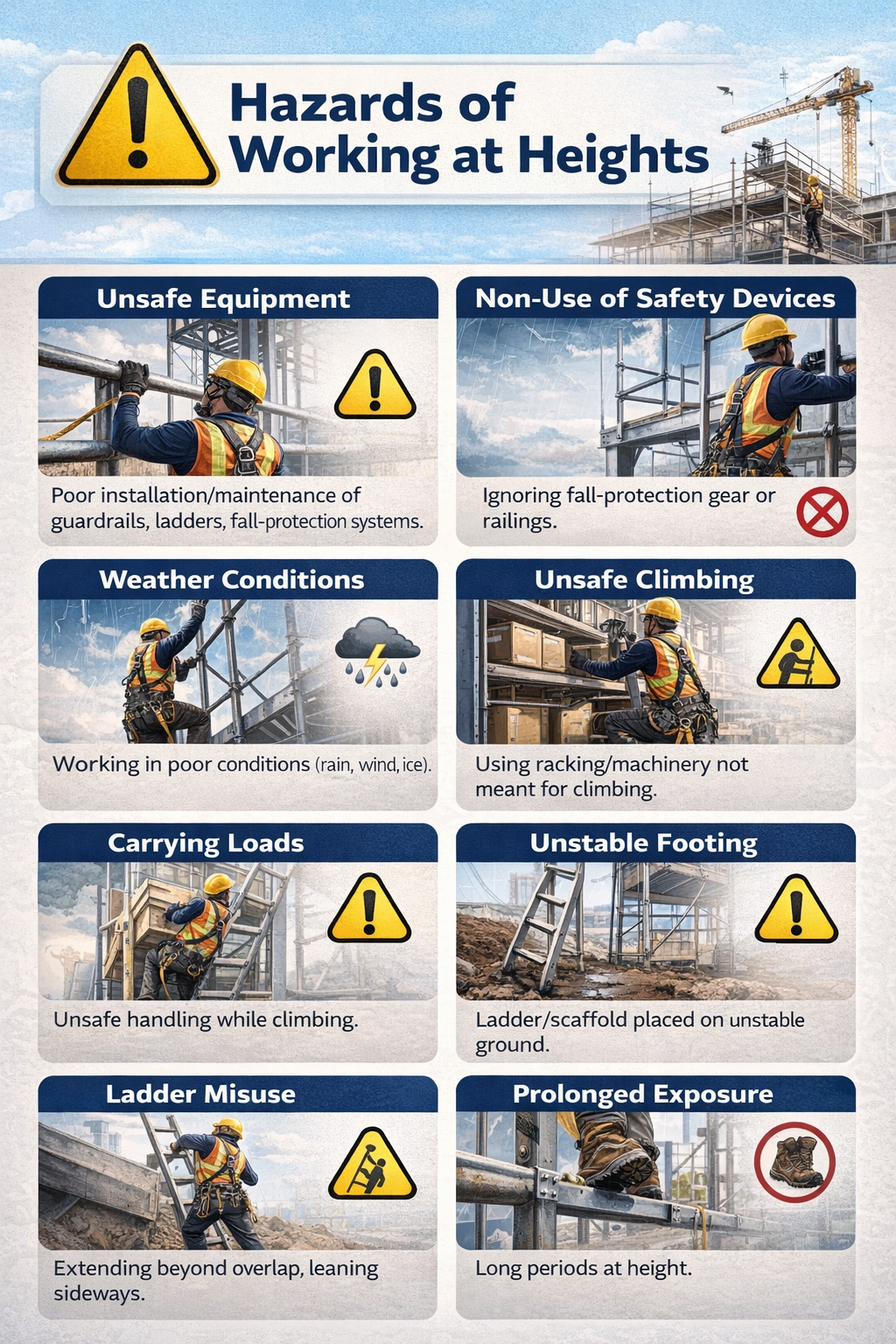
Hazards of Working at Heights
Work at height remains one of the leading causes of fatalities and serious injuries in high-risk sectors. Identifying and mitigating hazards before performing tasks is a critical safety measure that saves lives. Below is a detailed breakdown of the most common hazard factors associated with working at heights.
Common Hazard Factors
| Hazard Factor | Examples |
|---|---|
| Unsafe Equipment | Poor installation or maintenance of guardrails, ladders, or fall-protection systems. |
| Non-use of Safety Devices | Ignoring or bypassing fall-protection gear such as harnesses or fixed railings. |
| Weather Conditions | Working in rain, wind, or icy conditions increases the risk of slips and falls. |
| Unsafe Climbing | Using equipment like racking, shelves, or machinery not designed for climbing. |
| Carrying Loads | Improperly carrying heavy or bulky items while ascending or descending ladders. |
| Unstable Footing | Placing ladders or scaffolds on uneven or unstable ground surfaces. |
| Ladder Misuse | Overreaching, leaning sideways, or extending beyond proper overlap. |
| Prolonged Exposure | Spending long durations at height, increasing fatigue and risk of incident. |
| Improper Footwear | Wearing shoes without appropriate non-slip soles or ankle support. |
Takeaway
It is the responsibility of both employers and workers to ensure that hazards are identified, mitigated, and monitored at all times. Proper training, use of the right equipment, and awareness of environmental factors form the core of a safe work-at-height environment.
Every incident prevented through preparation is a life potentially saved. Safety begins with recognition—and the willingness to act on it.